
Views: 0 Author: Site Editor Publish Time: 2026-01-12 Origin: Site
Nitinol is a groundbreaking material, crucial in modern medical devices. With its unique shape memory and superelasticity, it plays a vital role in improving patient outcomes.
In this article, we will explore how Nitinol is processed into wire, tubes, and sheets for medical applications. You will learn about its transformation from raw material to the critical components used in stents, guidewires, and more.
Nitinol’s two most notable properties—shape memory and superelasticity—are what make it so valuable in medical applications.
● Shape Memory: Nitinol has the ability to return to its original shape when heated beyond a certain temperature. This property is especially useful in medical devices like stents and guidewires. For example, self-expanding stents rely on this characteristic to expand once they are placed inside the body at body temperature.
● Superelasticity: This property allows Nitinol to undergo significant deformation under stress and return to its original shape once the stress is removed. It is essential for guidewires and catheters, which need to navigate through tight, tortuous paths without breaking or losing shape.
These properties make Nitinol ideal for medical devices, as it offers a combination of flexibility, strength, and adaptability that is unparalleled by traditional metals.
Nitinol plays a key role in various medical devices, improving patient care and treatment outcomes.
● Stents and Guidewires: Nitinol is widely used in the production of self-expanding stents and guidewires. The alloy's shape memory ensures that stents can be delivered in a compact form and then expand to restore blood flow when deployed. Similarly, guidewires made from Nitinol provide flexibility and strength, enabling them to navigate complex pathways in the body during diagnostic and surgical procedures.
● Implants: Nitinol is also used in implants, especially in orthopedic and dental applications, where it helps provide lasting solutions due to its excellent biocompatibility and mechanical properties.
Nitinol is an alloy primarily composed of nickel and titanium, and its properties are heavily dependent on the exact ratio of these metals. Typically, Nitinol contains about 55% nickel and 45% titanium, but the composition can vary slightly to suit specific applications. The raw materials are carefully sourced to ensure they meet the necessary purity standards, as impurities can affect the final properties of the alloy.
Once the raw materials are sourced, the next step is melting. Nitinol is melted using precision techniques that maintain control over the temperature, which is critical for achieving the desired shape memory and superelastic properties. The melting process must be carefully controlled to ensure that the alloy is homogeneous and free of defects.
● Vacuum Induction Melting (VIM): This method is commonly used in Nitinol processing to prevent contamination and ensure a high-quality alloy.
● Arc Melting: Another technique used, arc melting involves using an electric arc to melt the metals, which ensures that the titanium and nickel are well mixed.
By maintaining precise control over the temperature and environment during melting, manufacturers ensure that the Nitinol retains its optimal properties for medical applications.
After the melting process, Nitinol is shaped into wire, tubes, and sheets depending on its intended application.
Form | Manufacturing Method | Application |
Wire | Drawing through dies | Guidewires, catheters, and other surgical tools requiring flexibility and precision. |
Tube | Extrusion | Stents, implants, and other devices requiring long, cylindrical shapes. |
Sheet | Rolling | Implants, surgical tools, and other devices requiring thin, flat layers of Nitinol. |
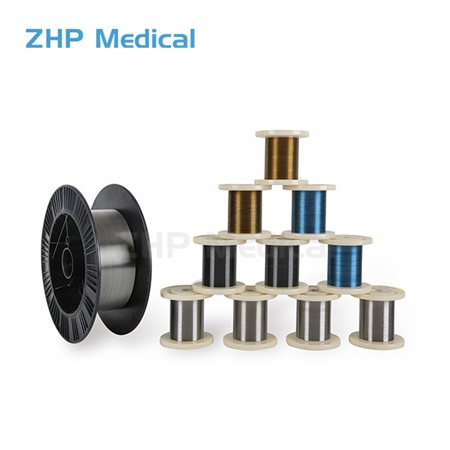
● Wire Production: Nitinol wire is drawn through a series of dies to reduce its diameter to the desired size. This wire is essential for applications like guidewires and other surgical tools. The wire is often processed further by heat treatment to ensure that it retains its shape memory and superelastic properties.
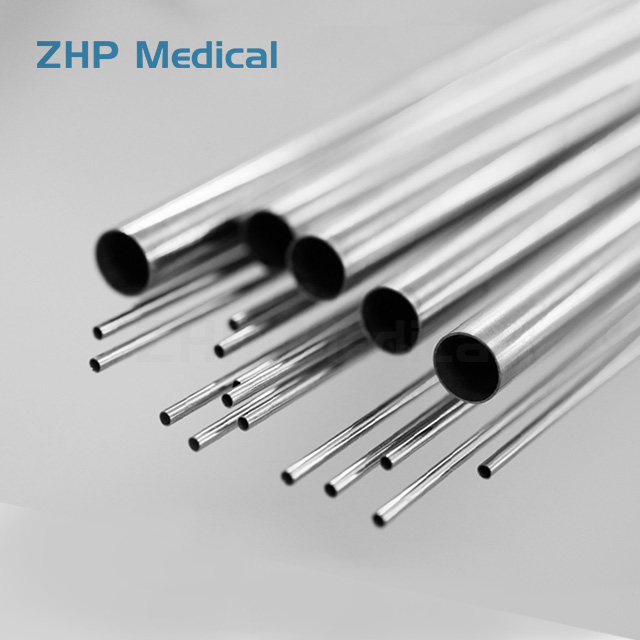
● Creating Tubes and Sheets: Tubes and sheets of Nitinol are created using extrusion and rolling techniques. For tubes, the Nitinol is extruded into long cylindrical forms, which are then cut into smaller sections or used directly in medical devices like stents. Sheets of Nitinol are created by rolling the alloy into thin, flat layers. These sheets are used in various implantable devices and surgical tools.
Nitinol’s shape memory capability has a profound impact on medical device performance, especially in devices like stents and implants. Once deployed, Nitinol-based devices can "remember" their original shape and return to it, even when subjected to mechanical stress. This ability is crucial in devices like self-expanding stents, where the device needs to expand to restore blood flow once it reaches body temperature.
Nitinol’s superelasticity makes it ideal for medical tools like guidewires and catheters, which require flexibility and durability. For example, a guidewire made from Nitinol can bend and flex through narrow and tortuous vessels without losing its shape or breaking, ensuring a smoother, safer procedure for the patient.
Minimally invasive surgeries, such as those involving endoscopic procedures, benefit greatly from Nitinol’s properties. Nitinol devices, including stents and guidewires, enable doctors to perform complex surgeries with smaller incisions, reducing recovery time and minimizing the risk of infection for patients.
To create wire suitable for medical applications, Nitinol is drawn through various dies to reduce its diameter. The wire is then heat-treated to lock in its shape memory and superelastic properties. This process ensures that the wire is both flexible and strong enough for medical use. In the case of guidewires, the flexibility is essential for navigating through complex vascular systems.
Nitinol tubes and sheets are created using extrusion and rolling techniques. The extrusion process involves pushing the Nitinol alloy through a mold to create long, cylindrical shapes. These tubes are used in applications like stents, where they must expand to restore blood flow once implanted. Sheets are created through rolling, where the alloy is passed through rollers to form thin, flat pieces. These sheets are essential for creating a wide range of medical implants.
One of the greatest advantages of Nitinol is its durability. Once implanted in the body, Nitinol-based devices can last for extended periods without degrading, making them ideal for long-term implants. Additionally, Nitinol’s biocompatibility ensures that it will not cause adverse reactions in the body, reducing the likelihood of complications or rejection.
Nitinol’s processing techniques also contribute to its cost-effectiveness in manufacturing. Although it requires precise handling, the efficiency of producing Nitinol wire, tubes, and sheets at scale allows manufacturers to produce high-quality medical devices at a competitive price. The long-lasting nature of Nitinol-based devices means fewer replacements, leading to reduced overall healthcare costs.
Nitinol continues to evolve, with new applications emerging in the medical field. Researchers are exploring its use in orthopedic implants, dental devices, and robotic surgery tools. As technology advances, Nitinol’s potential for improving patient outcomes will continue to expand, offering new solutions for healthcare professionals and patients alike.
Nitinol plays a critical role in medical devices, particularly in its ability to be processed into wire, tubes, and sheets. These forms are essential in applications like stents and guidewires, improving patient outcomes.
The precision required in processing Nitinol ensures high-quality performance. Products from ZHP Medical leverage Nitinol's unique properties, offering durability, flexibility, and biocompatibility for advanced medical technologies.
A: Nitinol is a nickel-titanium alloy known for its shape memory and superelasticity. These unique properties make it ideal for medical devices like stents and guidewires, where flexibility and durability are essential.
A: Nitinol is processed through melting, drawing, extrusion, and rolling techniques. This transforms it into wire, tubes, and sheets that are used in critical medical devices such as implants and surgical tools.
A: Nitinol's shape memory and superelasticity allow it to perform under stress and adapt to body conditions. These properties are crucial for medical devices, ensuring better functionality and patient outcomes.
A: Nitinol offers durability, biocompatibility, and long-lasting performance in medical devices. Its flexibility helps create devices like stents and guidewires that can expand or adapt within the body.
A: Nitinol’s flexibility and shape memory allow medical devices like guidewires and stents to navigate complex body areas with minimal incisions, reducing recovery times and complications.
A: While Nitinol-based devices may be more expensive initially, their durability and long-term effectiveness make them cost-effective in the long run due to fewer replacements and complications.


